How US–China Tariffs Are Reshaping Freight Routes Through Singapore
How US–China Tariffs Are Reshaping Freight Routes Through Singapore
Posted on
SINGAPORE — As the "Great Trade Recalibration" intensifies, the city-state of Singapore is navigating a high-stakes transformation of its role in international shipping. With US–China trade relations entering a phase of de facto decoupling, the traditional movement of goods is being redirected, forcing a total overhaul of regional sea freight strategies and the emergence of new inland trucking corridors.
The Protectionist Surge: Tariffs Hit Home
The landscape of global commerce shifted fundamentally following a series of aggressive fiscal measures. Chinese exports to the United States now face a staggering 145% total duty, comprised of a 100% base tariff, a 20% punitive levy, and a 25% escalation clause. Consequently, China’s exports to the US are projected to drop by more than 50% from 2024 levels.
Singapore has found itself caught in this protectionist wave. In early April, the US imposed a blanket 10% tariff on almost all nations, including Singapore, despite its existing Free Trade Agreement with Washington. This move has sent ripples through the export-oriented manufacturing sector, specifically threatening Singapore’s high-tech components and electronics, which now face higher costs to reach American consumers.
Maritime Strains and Sea Freight Volatility
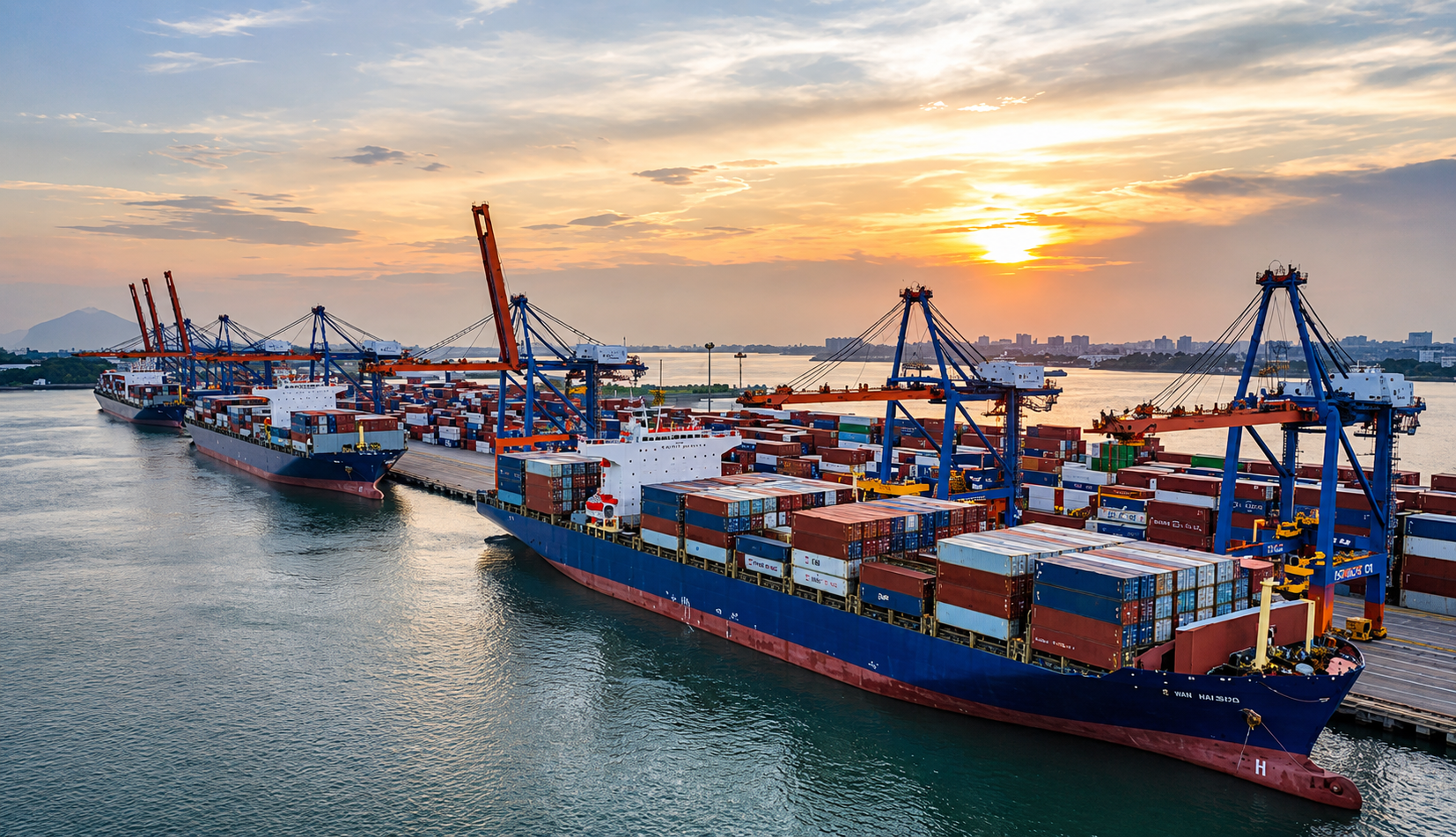
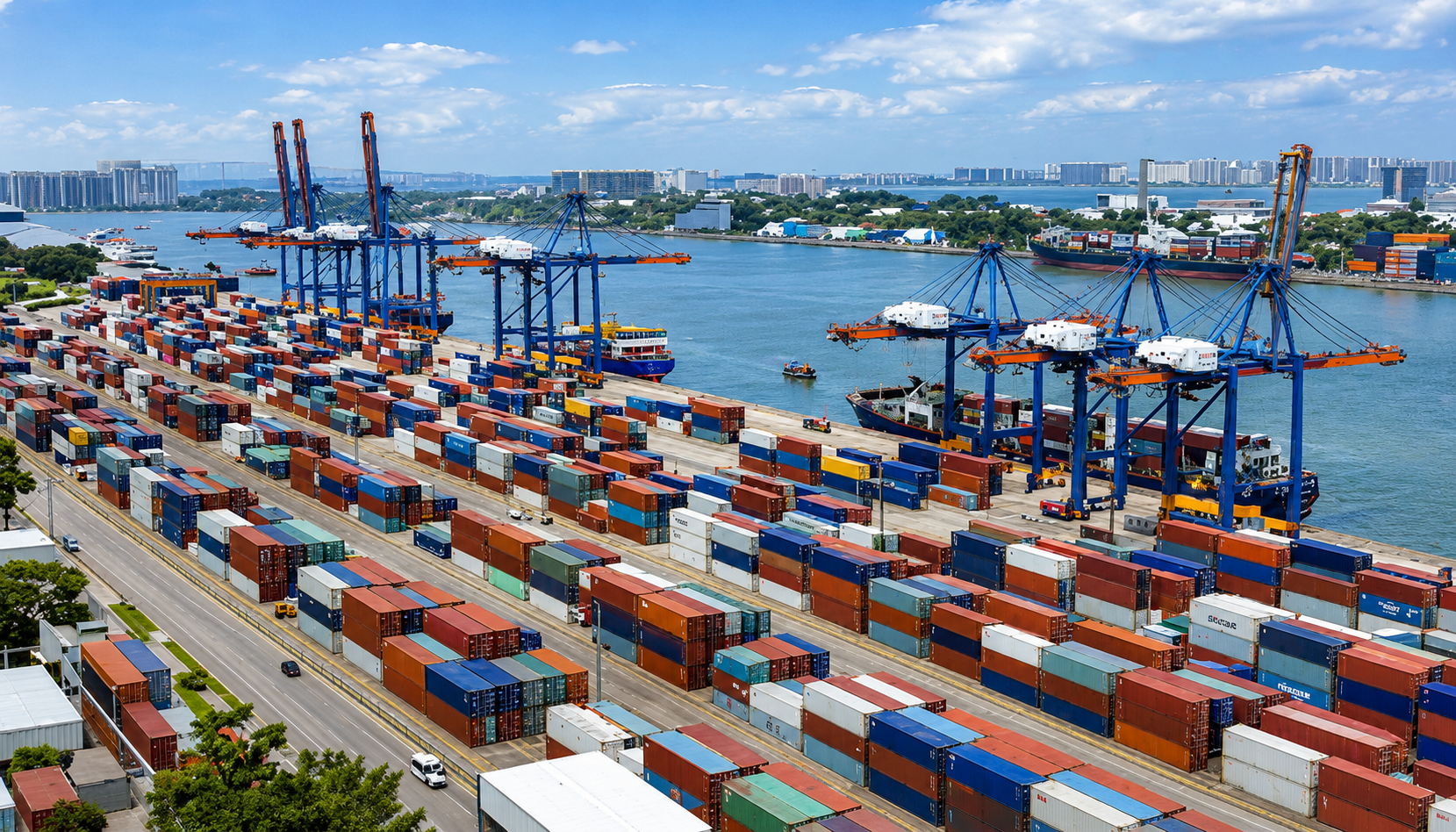
While Singapore remains the world’s busiest transshipment port, handling over 37 million TEUs annually, recent data suggests the trade war is beginning to bite. In April 2026, bunker (marine fuel) sales in Singapore fell by 8.7% month-on-month. This decline coincided with a 13.3% drop in the number of oil-tanker arrivals, attributed to war-induced supply tightness and shifting global routes.
The priority for sea freight providers has shifted from speed to "regulatory intelligence". Shippers are now under intense scrutiny from US enforcement agencies to prevent "label switching" or unauthorised transshipment intended to mask the Chinese origin of goods. Under new compliance rules, freight forwarders can even be held liable for routing decisions that unintentionally enable such circumvention.
The ASEAN Pivot and Inland Logistics
Faced with a restricted American market, Beijing has accelerated its "ASEAN Pivot," strengthening ties with Vietnam, Malaysia, and Cambodia to secure new export lanes. This realignment is transforming Southeast Asia into the primary node for Chinese trade, which reached $872 billion in the region in 2023.
To maintain autonomy, new infrastructure projects are redrawing the map. Cambodia’s Funan Techo Canal is specifically designed to bypass traditional Vietnamese ports, which will likely reshape regional trucking and inland logistics as firms seek the most efficient multi-modal paths for redirected Chinese goods.
However, this surge in volume brings the risk of "overcapacity," with factories potentially unloading excess inventory into ASEAN markets at cut-rate prices.
Strategic Outlook: Resilience Through Innovation
Prime Minister Lawrence Wong has acknowledged the risk that multinational corporations may relocate production capacity closer to the US to avoid these tariffs. In response, Singapore is doubling down on its digital trade infrastructure and customs automation to maintain its competitive edge as a logistics hub.
"In this evolving environment, logistics players that can deliver flexibility, visibility, and regulatory intelligence will be the ones who lead," according to recent industry analysis. As manufacturing potentially shifts into untaxed jurisdictions, Singapore’s deep integration with the RCEP and CPTPP frameworks provides alternate pathways to sustain growth amidst the ongoing trade volatility.
This article examines how US–China trade tensions are reshaping supply chains across Southeast Asia, highlighting Singapore's evolving role as regional trade routes shift and manufacturers seek alternative export pathways through ASEAN markets.
This source analyses the effects of new US tariffs on Singapore's export-driven economy, covering the implications for manufacturing, trade competitiveness, and the country's strategic response through digital infrastructure, customs efficiency, and regional trade agreements.
Reuters reported on Singapore's declining bunker fuel sales and reduced tanker arrivals, illustrating how geopolitical tensions and supply disruptions continue to influence maritime operations and freight activity across the region.
Written by Eric Bailey, this source outlines the strategic shift for exporters, including the move to a "Just-in-Case" inventory model and the 30% increase in fuel consumption caused by rerouting around the Cape of Good Hope
This source provides the "present-day" 2026 data regarding the $400,000 per day cost for supertankers and the seven-day waiting times for berths in Singapore. It also details the broader energy security risks and the 20% spike in marine insurance premiums..
This article focuses on the refrigerated cargo market, highlighting the upward rate volatility in the second quarter of 2026 and the impact of fuel surcharges and equipment imbalances on perishable goods
This article supplied data on global oil prices surging past US$100 per barrel and explained the ripple effect this has on the economy, including higher costs for groceries, retail, and construction. It also noted that the Monetary Authority of Singapore (MAS) raised its inflation forecasts for 2026
This source introduced the concept of the "double chokehold" on global trade. It provided specific figures for Brent crude at US$109 per barrel and highlighted the 49% rise in charter rates for crude oil carriers. It also detailed the strike on the Mina al-Ahmadi refinery, which tightened the availability of bunker fuel in Singapore
This source provided the critical update that Singapore's overall inflation reached 1.8% in March 2026, largely due to higher petrol and retail prices driven by the "Iran war". It also detailed that private transport inflation jumped to 6.6% year-on-year
This report outlines the global risk to the Strait of Hormuz (handling 25% of seaborne oil) and the subsequent ripple effects on global food and fertiliser prices